Manufactured Friction: Learning with AI
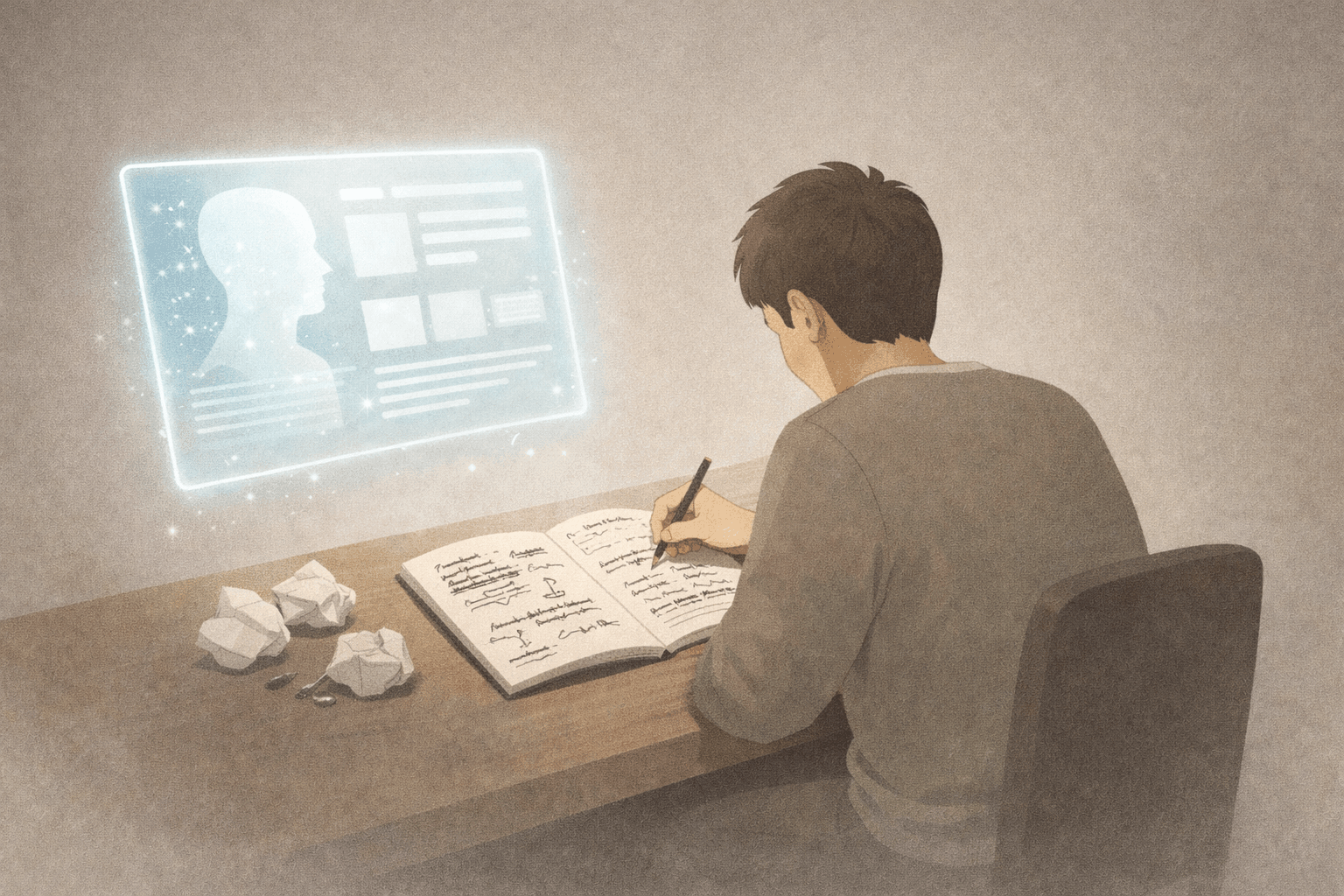
I recently started learning n8n and agentic AI systems, and it made me realise how constrained most conventional learning formats are.
Most learning channels I’ve used over the years have a fixed shape. Articles. Documentation. Videos. Even instructor-led sessions, while interactive, usually follow a predefined flow. You can ask questions, but only within the boundaries of the material and the time available.
That structure works well early in a career. Over time, especially as experience grows, it starts to feel restrictive. Real learning becomes less linear, but the formats don’t adapt.
What changed with AI wasn’t just speed. It was the shape of learning itself.
A different shape of learning
With AI, learning no longer feels like moving from chapter to chapter. It feels more like a conversation that keeps reshaping itself based on where I’m stuck, what I already know, and what I’m curious about next.
I don’t have to translate my confusion into the “right” question. I can dump half-formed thoughts, wrong assumptions, and partial ideas, and still move forward.
In that sense, it feels like a tailor-made course, rewritten in real time, just for how I think.
That flexibility is genuinely powerful.
The hidden cost
That sounds like a win, and in many ways it is. But some of the most durable lessons I’ve learned over the years didn’t come from answers. They came from mistakes that taught me things I didn’t even know I needed yet.
Traditional learning environments have friction built into them. You misunderstand a concept. You apply it wrong. You hit a wall. And only then do you realise what was missing in your understanding.
AI removes many of those walls and blockers automatically.
Sometimes that’s helpful. More often, it quietly removes the struggle that would have shaped your thinking.
Manufactured friction
This is where the idea of manufactured friction starts to matter.
When learning becomes too efficient, you don’t naturally sit with confusion long enough. You move on before the lesson has really sunk in. You get something that works, but you’re not always sure why it works.
Over time, that can affect long-term craftsmanship.
Deep skill isn’t just about arriving at correct answers. It’s about building intuition, judgment, and taste. Those things usually grow slower, through resistance, not acceleration.
If AI removes friction by default, we may need to reintroduce some of it intentionally.
A more deliberate way to learn with AI
This isn’t an argument against AI-assisted learning. I’m using it, and I’ll continue to use it.
But I’m starting to treat it less like an answer engine and more like a thinking partner. Sometimes that means asking it to slow down. Sometimes it means resisting the urge to accept the first “good enough” solution.
The goal isn’t to struggle unnecessarily. It’s to struggle where it matters.
Because in the long run, the quality of what you build depends on how deeply the learning reshaped how you think.