Decision Making in Teams: Context vs Command
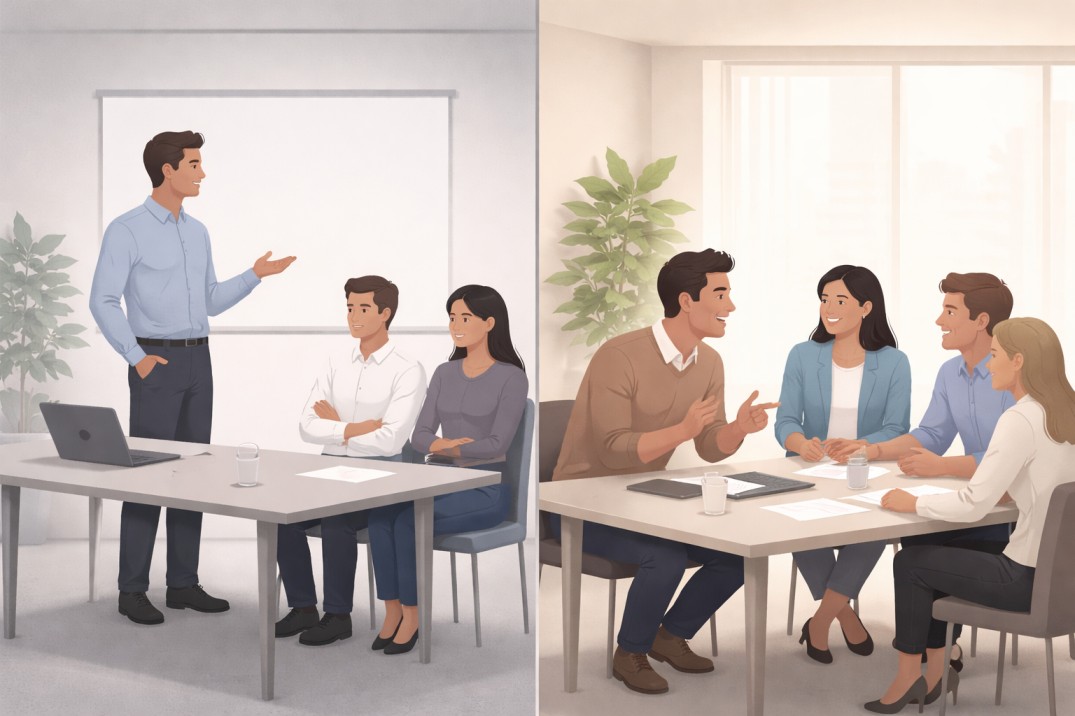
Early in my career, I mostly worked with managers who made decisions and passed them down. At that stage, it didn’t bother me much. In fact, it helped. When you’re starting out, you need clarity more than anything else, and having someone define the direction makes things simpler.
As I grew in my role, that started to change. I wasn’t just looking for tasks anymore. I wanted to understand how decisions were being made, what options were considered, what trade-offs were involved, and why one path was chosen over another. That’s when I started noticing a clear difference in management styles.
Two Kinds of Managers
In some teams, that context never really came. Decisions were still handed down, just with higher expectations attached. You’re expected to deliver better outcomes, but without being part of the thinking behind them.
In other teams, the experience felt very different. Managers would take the time to walk through their reasoning, sometimes informally, but enough to show how they were thinking and how a decision came together. The work didn’t change, but the way you engaged with it did.
Now, in my current role, I work with a mix of project managers and first-time leads, often working alongside them or guiding them rather than in a strict reporting structure. And I see the same pattern play out. New managers tend to default to giving instructions without much context, as if decision-making authority automatically removes the need to explain. I’ve seen similar behaviour in some very experienced managers as well.
The difference shows up in how teams commit to decisions, how much they truly own them, and what they learn from the work they’re doing. It also plays a role in how trust is built, not assumed, but earned through clarity and shared understanding.
When Context Is Missing
In teams where decisions come without context, the work still moves forward. Things get delivered, timelines are met, and from the outside, it can look like everything is working fine.
But the difference starts to show in how people engage with the work.
I’ve seen this play out in small but frustrating ways. A team member starts working on a feature, spends a couple of days getting into it, and then is asked to stop and pick up something else. This repeats a few times. There’s no explanation around why priorities are shifting, whether there are dependencies, or what changed on the business side.
At some point, it stops feeling like real work and starts feeling like random task switching. The natural reaction is frustration, not just with the situation, but with how it’s being handled.
More importantly, you stop engaging with the “why” altogether.
When you don’t understand why a decision was made, it’s hard to fully commit to it. You follow through because it’s expected, but there’s a gap between executing something and actually believing it’s the right approach. That gap shows up in small ways, less curiosity, fewer questions, and a tendency to just move on once your part is done.
Over time, you stop digging deeper and slowly stop caring as much. It starts to feel like you don’t really own the outcome, it’s just a task to be completed, and the ownership sits somewhere else.
Teams don’t own what they don’t understand.
When similar situations come up again, the team is not equipped to handle them with confidence. They also become disinterested or disengaged as owners and start operating more like task executors than decision-makers. They’ve been part of the execution, but not the thinking behind it, and that gap compounds.
Along the way, trust stops being something that is built and starts feeling like something that is expected, even demanded, without being earned. The team is asked to go along with decisions without really understanding how they were made.
When Context Is Shared
In teams where managers take the time to explain their thinking, the shift is immediately noticeable.
Decisions are still made, and not everything turns into a long discussion, but there’s enough context for people to understand how things are coming together. You get visibility into the options that were considered, what constraints mattered, and why a particular path was chosen.
I’ve seen the difference this makes in high-pressure situations as well.
There was a case where a client pulled timelines forward for a critical feature to align it with an upcoming press release. The timelines were aggressive, and the ask was not easy. Instead of just pushing the team to deliver, the manager explained the stakes clearly, what the business impact was, why this mattered right now, and what trade-offs we were making to get there.
The plan was shared, expectations were clear, and the team aligned on what needed to be done. The team agreed and worked towards the goal, pushing harder, not because they were told to, but because they understood what they were working towards.
In that kind of environment, you’re not just executing anymore, you’re able to think along with the decision. Even if you don’t fully agree, you understand the reasoning, and that makes it easier to commit. Conversations improve, questions become more meaningful, and over time the team starts contributing better inputs.
After a few such discussions, you don’t need every decision to be explained in detail. You begin to understand how your manager thinks, what they optimise for, and how they evaluate trade-offs. That context compounds, and the team becomes more confident making similar calls on their own.
When people understand the thinking, they start thinking with you.
This is where trust starts to build in a more natural way. It’s not assumed or demanded. It comes from repeatedly seeing how decisions are made, even when they’re not perfect. Because of that, there are moments when a manager may not have the time or space to walk through everything. In those situations, the team still commits, not because they were told to, but because the trust has already been built and can be leaned on.
Over time, that trust gets used more carefully. You don’t need to explain everything all the time, because the team already has enough context to fill in the gaps.
Finding the Balance
Having seen both styles up close, I’ve become more conscious of how I communicate decisions.
It’s very easy to just make a call and move on, and in many situations that is the fastest way to get things done, especially when there’s pressure or when the answer feels obvious.
At the same time, I’ve seen what that approach does over a period of time, so I often find myself leaning the other way. I try to explain how I’m thinking, what options I considered, and why I’m leaning in a certain direction, even in situations where it would be quicker not to.
I also realise I don’t always get the balance right. There are times where I feel I’m over-explaining or slowing things down, and other times where I look back and feel I could have just made the call and moved on. It’s not always clear in the moment where that line is.
What has become clearer is that when people understand how decisions are made, they engage differently, ask better questions, and over time start taking more ownership of those decisions.